Extremophiles - What if?
Updated: Mar 26, 2025
Extremophiles: The Quiet Architects of Possibility
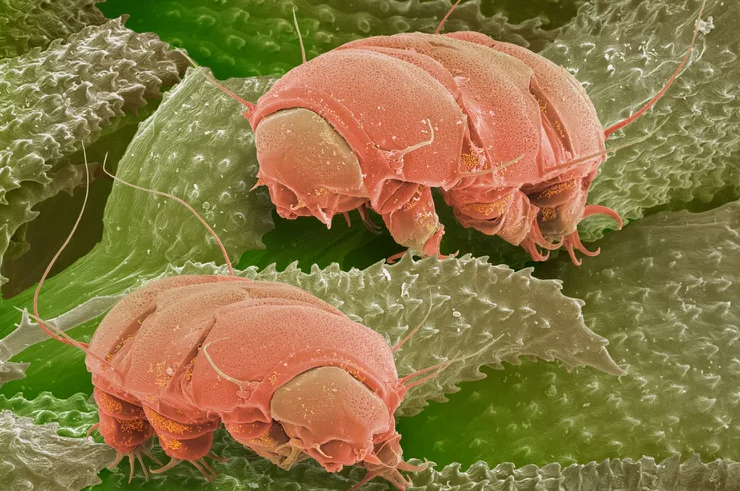
The term extremophile refers to organisms that thrive in conditions once thought utterly inhospitable to life: boiling vents on the ocean floor, under crushing pressure, surrounded by toxic chemicals. They don’t just survive—they adapt in ways that seem borderline supernatural. They rewrite the rules.
Some are chemolithoautotrophs—organisms that consume rock and metal to survive. Others live without oxygen or sunlight. Their biology is foreign by human standards, but very much of this world. And that raises a question we can’t ignore:
What if we’ve mistaken complexity for intelligence, and intelligence for consciousness?What if we’ve been surrounded by aware life forms all along, but failed to recognize their language?

Non-Human Cognitive Awareness: Breaking the Bias
Our ideas of intelligence are tethered to familiarity. Faces, eyes, verbal speech—these are our benchmarks. But those are just human tools. What if perception and communication look nothing like us?
Some extremophiles react to chemical gradients or electromagnetic fields with eerie precision. Others move collectively in patterns that suggest coordination, decision-making, and even memory. Is that just biology—or is it intention?Could awareness arise from pressure, time, and isolation?
If yes... then Earth’s deepest oceans may be the closest we’ve come to distinctive, non-human, intelligent contact.
The Deep Sea as a Parallel World
We’ve explored more of the moon than we have of Earth’s oceans. At extreme depths, sunlight doesn’t penetrate, pressure is bone-crushing, and temperatures swing from freezing to volcanic. It’s another world down there—one that doesn’t just seem strangely foreign but might truly be a separate ecosystem of consciousness.
In this silence and dark, evolution took a different path. Bioluminescent signals flash like coded language. Creatures move with elegance that suggests choreography, not instinct. The environment forces cooperation, resilience, and sensory expansion. To survive here, life had to become something else entirely.
Some scientists call it Earth’s final frontier.But what if it’s more than that?What if the deep sea is Earth’s hidden mirror—a preserved record of how life might evolve without sunlight or surface interference?A control group in Earth’s own experiment with life.And maybe… a home to minds that developed alongside us, but apart from us.

The Speculative Leap
So, let’s say life doesn’t need to look like us—doesn’t need arms, legs, or even a centralized brain. Maybe awareness can form in patterns of chemical signaling, clustered colonies, or even in the rhythms of bioluminescent flashes deep beneath the ocean’s surface.
If that’s true, then Earth’s deep-sea trenches might not just be dark, high-pressure wastelands… they could be home.
And if life developed down there under conditions more extreme than anywhere else on this planet, maybe—just maybe—it evolved consciousness in a completely different way. Not intelligence like ours. Not tool-use or language. But awareness. Presence. A recognition of environment and self, without needing to “think” the way we do.
Now take that thought and throw it outward into the cosmos.If Earth hides extremophiles in its deepest trenches, what might be thriving under the frozen oceans of Europa? Or in the methane lakes of Titan?What if the galaxy is teeming with life—but we’ve only been looking for the kind that waves back with five fingers?
What if awareness isn’t the rare product of ideal conditions… but the inevitable outcome of persistence, complexity, and time?

The Playful What If
What if the most advanced civilization on Earth isn’t on land, but curled in the thermal vents of the abyss, glowing softly, watching curiously as we fumble around with submarines and sonar?
What if we’re not alone—but just too loud, too bright, too fast to notice the quiet neighbors who’ve been here longer than us?
What if the silence of the deep isn’t emptiness—it’s wisdom in a different language?
What if the answers to non-human, intelligent life, consciousness, and connection have always been here…we just never thought to look down.

Not everything that watches needs eyes. Not everything that listens needs ears.
—Arden Blake
Comments